Books
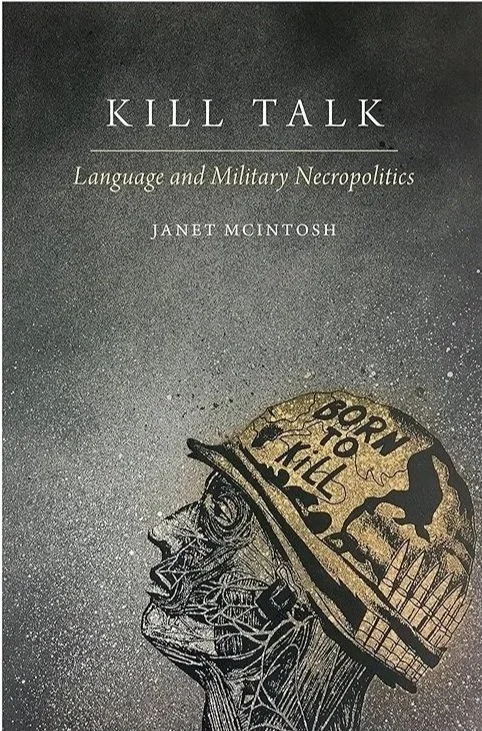
Oxford University Press (2025)Language and Military Necropolitics
The language used by American military personnel can be intense and confrontational, yet the relationship between language and military violence is rarely examined in depth. This groundbreaking book offers a unique perspective on how language facilitates the work of combat infantry — the state's killable killers. Through vivid ethnographic research, Janet McIntosh meticulously traces the nuances of military “kill talk” as it permeates the vast nervous system of the military, from the first exposure to yelling in Marine Corps basic training to the dark humor and nihilistic expressions found in war zones in Vietnam and the Middle East. McIntosh reveals how military trainers use language to deindividuate, toughen, and masculinize recruits, while infantry soldiers develop distinct linguistic repertoires and attitudes to suppress empathy, dehumanize and racialize the enemy, cope with loss, and dwell in a moral gray zone.
Review via Academia
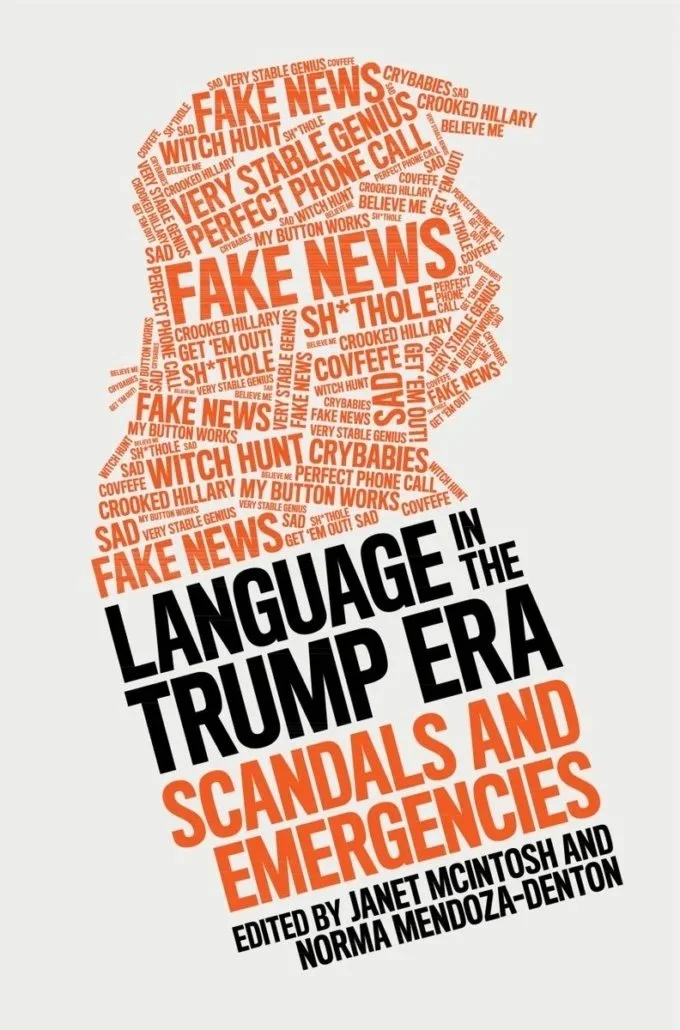
Cambridge University Press (2020)Scandals and Emergencies
(Co-edited with Norma Mendoza-Denton)
Early in his first campaign, Donald Trump boasted that “I know words. I have the best words,” yet despite these assurances, his speech style has sown conflict even as it has powered his meteoric rise. If the Trump era feels like a political crisis to many, it is also a linguistic one. Trump has repeatedly alarmed people around the world while exciting his fan base with his unprecedented rhetorical style, shock-tweeting, and weaponized words. Using many detailed examples, this fascinating and highly topical book reveals how Trump's rallying cries, boasts, accusations, and mockery enlist many of his supporters into his alternate reality. From Trump's relationship to the truth, to his use of gesture, to the anti-immigrant tenor of his language, it illuminates the less obvious mechanisms by which language in the Trump era has widened divisions along lines of class, gender, race, international relations, and even the sense of truth itself.
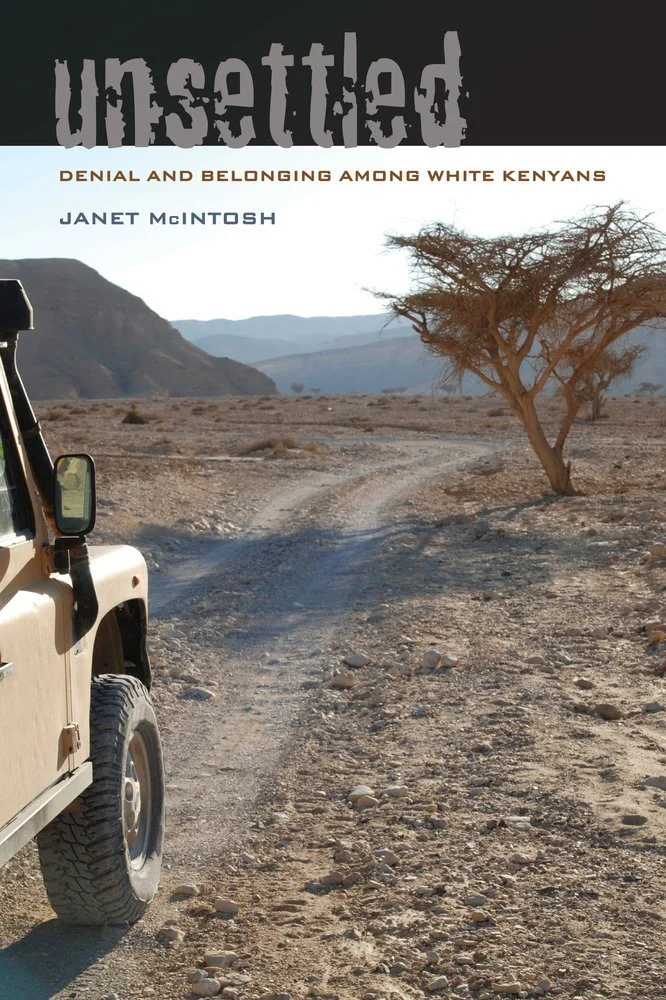
University of California Press (2016) Denial and Belonging among White Kenyans
In this book, Janet McIntosh looks at the lives and dilemmas of settler descendants living in post-independence Kenya. From clinging to a lost colonial identity to pronouncing a new Kenyan nationality, the public face of white Kenyans has undergone changes fraught with ambiguity. Drawing on fieldwork and interviews, McIntosh focuses on their discourse and narratives to ask: What stories do settler descendants tell about their claim to belong in Kenya? How do they situate themselves vis-a-vis the colonial past and anti-colonial sentiment, phrasing and re-phrasing their memories and judgments as they seek a position they feel is ethically acceptable? McIntosh explores contradictory and diverse responses: moral double consciousness, aspirations to uplift the nation, ideological blind-spots, denials, and self-doubt as her respondents strain to defend their entitlements in the face of mounting Kenyan rhetorics of ancestry.
American Ethnological Society Senior Book Prize, Honorable Mention, 2018. (Awarded biannually by the American Ethnological Society to a book by a senior scholar that “speaks to contemporary social issues with relevance beyond the discipline and beyond the academy.”)
Victor Turner Prize in Ethnographic Writing, Honorable Mention, 2017. (Awarded by the Society for Humanistic Anthropology, for “exemplars of the best ethnographic writing…destined to make a significant impact on the doing and writing of ethnography.”)
Review in Africa is a Country
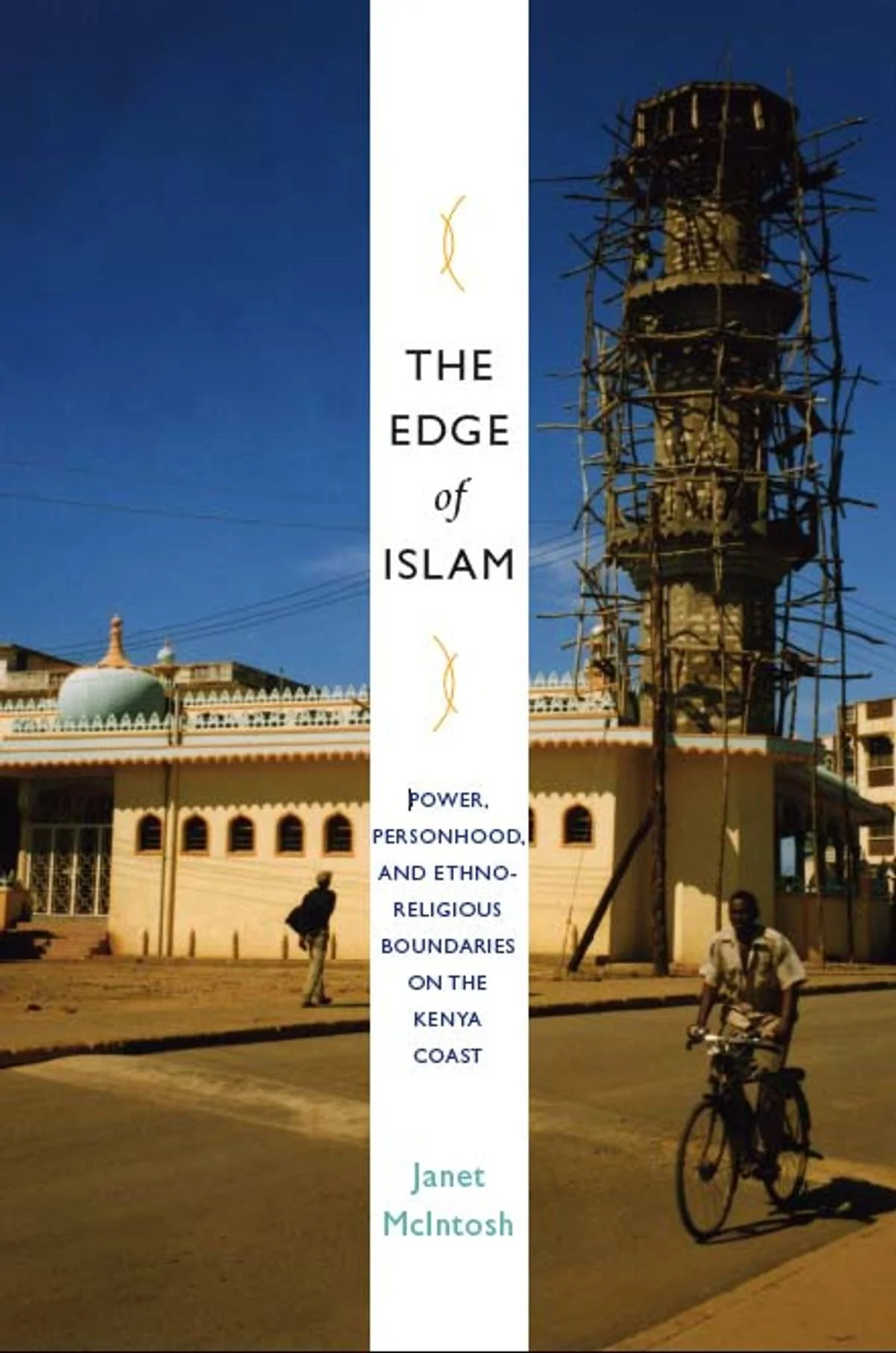
Duke University Press (2009)Power, Personhood, and Ethnoreligious Boundaries on the Kenya Coast
The Edge of Islam is a theoretically rich and innovative ethnographic study focusing on interactions between Swahili and Giriama communities in coastal East Africa. It explores essentialism, the fluidity of identities, and the influence of historical context on ethnicity and religion. McIntosh explains how culturally distinct modes of personhood influence the way social groups take up Islam and other religions, and introduces key concepts such as polyontology, demonstrating the complexity of religious and cultural exchanges in a landscape marked by political and social change.
Winner, Clifford Geertz Prize in the Anthropology of Religion, 2010. (Awarded by the Society for Anthropology of Religion to “an outstanding recent book in the field.”)
Review via Academia